

Export-Oriented Manufacturing
Digital platforms, workflow automation, system integration, production visibility, buyer communication, and international commercial support for manufacturers serving global markets.
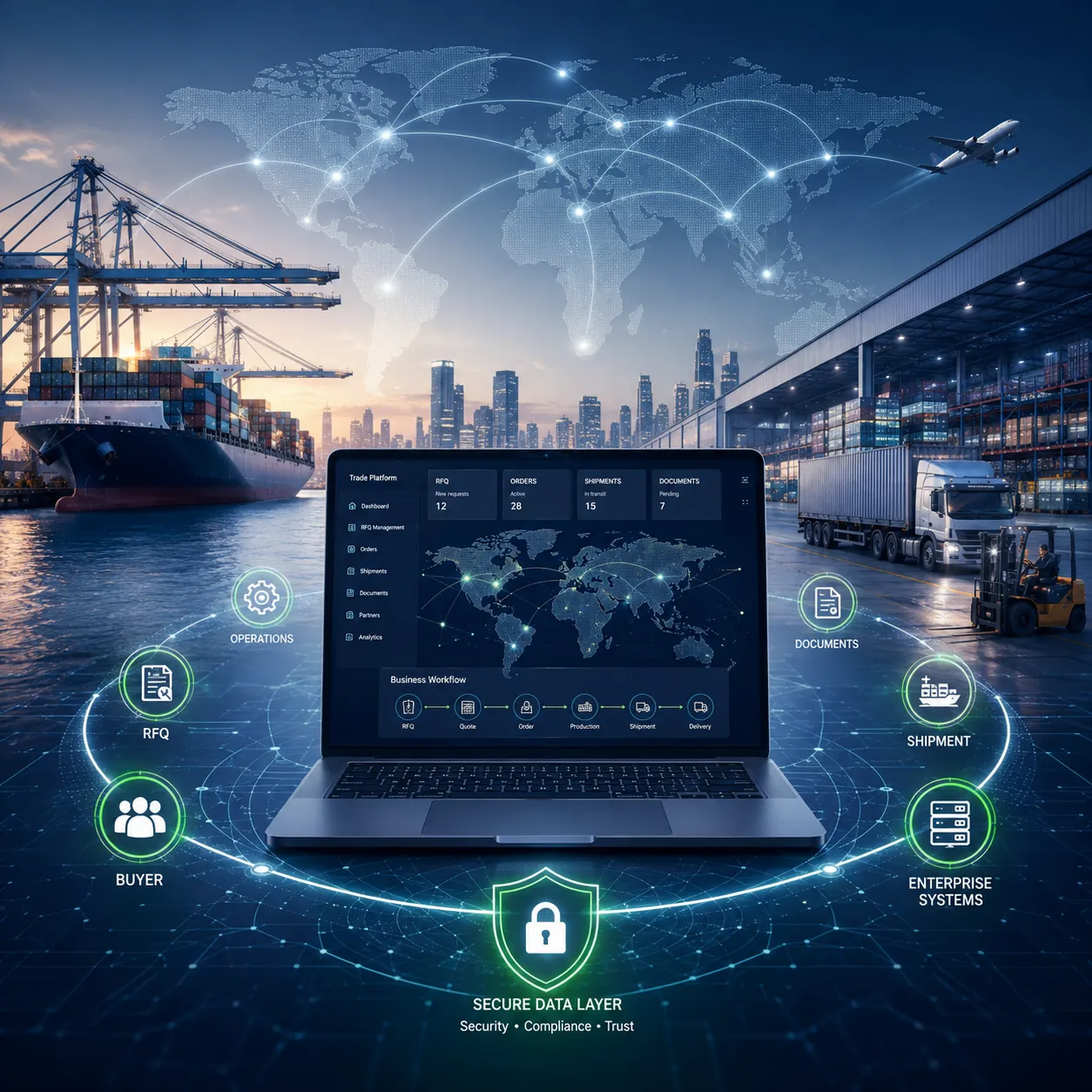

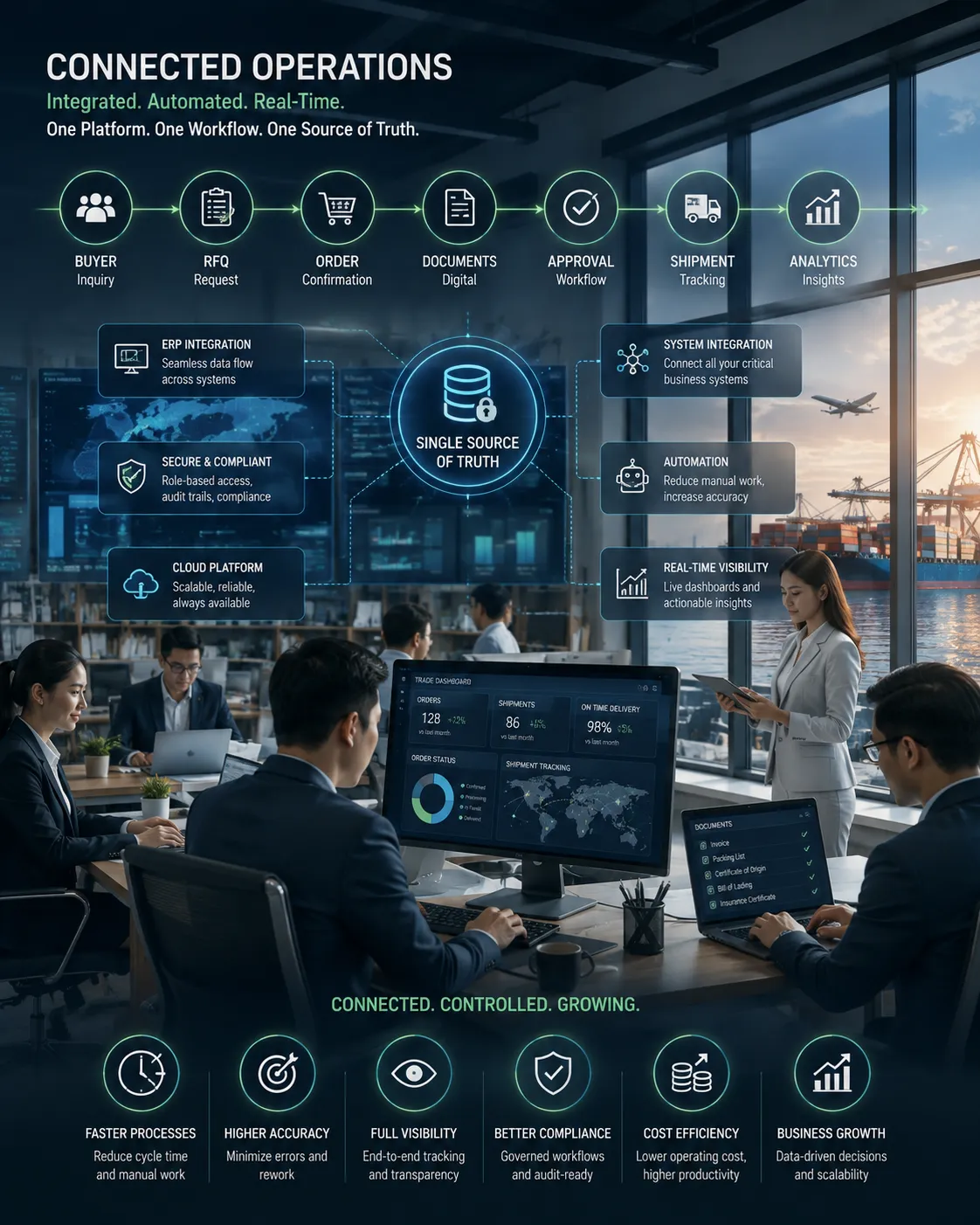
Export and import businesses operate across suppliers, buyers, logistics partners, internal teams, documents, financial processes, and multiple digital systems. When those systems are disconnected, complexity becomes operational risk.
Manual workflows across sales, sourcing, documentation, logistics, and operations create unnecessary delays and inconsistencies.
ERP, CRM, websites, inventory, logistics, and internal applications often operate independently instead of functioning as one digital ecosystem.
Management teams need reliable, real-time information to understand orders, inventory, shipments, customer activity, and business performance.
International operations increasingly depend on digital systems, making cybersecurity, access control, data protection, and infrastructure reliability business-critical.
Successful digital transformation in export and import businesses requires more than software development. It requires an understanding of how international trade, operations, data, people, and technology interact across the business.
We design technology around real export, import, sourcing, manufacturing, logistics, and international buyer workflows.
Technology decisions begin with operational problems, business objectives, integration requirements, and measurable outcomes.
We connect digital platforms, internal applications, ERP, CRM, inventory, logistics, analytics, and business data into a more coherent digital ecosystem.
Cybersecurity, access control, data protection, infrastructure reliability, and responsible architecture are considered from the beginning — not added as an afterthought.
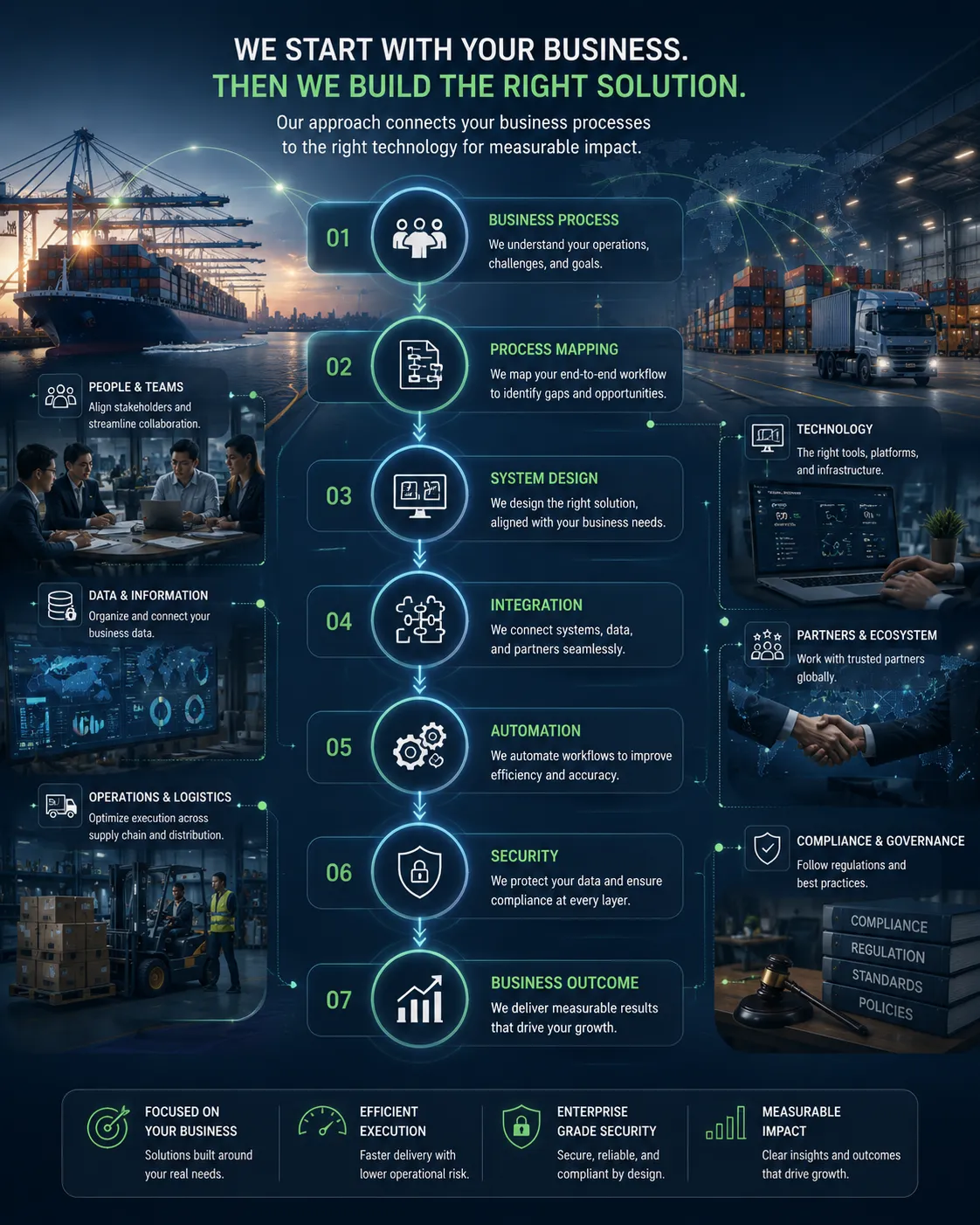
From international-facing digital platforms to internal business systems, Eximtech helps companies build a connected technology foundation for global growth.
High-performance digital platforms designed to build international buyer confidence, communicate technical capabilities, and support complex B2B decision journeys.
Business value: Improve buyer experience, credibility, lead quality, and international market readiness.
Digitalize repetitive workflows across sales, sourcing, approvals, documentation, operations, and trade-related coordination.
Business value: Reduce manual work, process inconsistency, delays, and operational dependency on spreadsheets or disconnected communication.
Connect websites, ERP, CRM, inventory, finance, logistics, and operational systems into a more integrated information environment.
Business value: Create stronger data continuity, process visibility, and operational control.
Transform operational data into dashboards, alerts, reporting, and decision-support tools for management and operational teams.
Business value: Improve visibility across orders, inventory, suppliers, shipments, customers, and business performance.
Apply AI and data technologies to selected business processes such as document processing, information retrieval, analysis, workflow assistance, and operational intelligence.
Business value: Accelerate information processing and support more informed business decisions.
Design secure application architecture, infrastructure, access control, monitoring, backup, and data-protection foundations for business-critical digital systems.
Business value: Reduce digital risk and strengthen operational resilience.
Every export-oriented industry has different operational requirements. Eximtech adapts technology architecture to the workflows, stakeholders, data, and commercial realities of each business.
Digital platforms, workflow automation, system integration, production visibility, buyer communication, and international commercial support for manufacturers serving global markets.
Technology for sourcing, sales coordination, supplier management, documentation, customer relationships, order visibility, and multi-party trade operations.
Digital systems supporting supplier networks, quality information, traceability, documentation, product data, buyer communication, and export operations.
Technology supporting product catalogs, specifications, buyer inquiries, production coordination, quality processes, logistics, and international project communication.
Supplier discovery workflows, qualification, RFQ management, evaluation, documentation, collaboration, and buyer-facing sourcing platforms.
Integrated technology for procurement, inventory, warehousing, sales operations, distribution visibility, finance coordination, and customer ordering.
Operational dashboards, shipment visibility, warehouse workflows, tracking integration, documentation, alerts, and data-driven coordination.
Digital platforms, multilingual readiness, international SEO foundations, business-system integration, and digital infrastructure for companies entering global markets.
Digital transformation should not be measured by how many systems are implemented, but by how effectively technology improves operations, visibility, decision-making, customer experience, risk management, and the ability to scale.
Digitize repetitive workflows and reduce unnecessary manual coordination across teams, systems, and business processes.
Business value: Less administrative friction. More productive operations.
Connect operational data across sales, sourcing, inventory, logistics, customers, and management reporting.
Business value: Better visibility for faster and more informed decisions.
Standardize workflows, approvals, responsibilities, and information flows across business-critical operations.
Business value: More consistent execution with clearer accountability.
Create professional digital experiences that make it easier for international buyers to understand capabilities, products, documentation, and commercial value.
Business value: Stronger credibility and more effective B2B engagement.
Build security, access control, data protection, monitoring, and operational safeguards into the digital environment.
Business value: Greater resilience as digital dependency increases.
Build technology architecture that can evolve as transaction volume, teams, markets, products, and operational complexity grow.
Business value: Technology that supports growth instead of becoming a constraint.
Eximtech designs technology as an integrated business environment rather than a collection of isolated applications. The objective is to create reliable information flow across customer-facing platforms, internal systems, operational processes, and management decision-making.
Build secure, high-performance digital platforms for international buyers, customers, suppliers, partners, and internal stakeholders.
Digitalize operational workflows and connect the applications that support day-to-day business execution.
Transform fragmented operational information into structured data, dashboards, reporting, alerts, and decision-support capabilities.
Build the technical foundation required for secure, reliable, and scalable digital operations.
As export, import, manufacturing, and supply-chain operations become more digitally connected, cybersecurity becomes an operational requirement. Eximtech considers security, access, data protection, infrastructure reliability, and recovery throughout the technology lifecycle.
Security considerations are incorporated into application, integration, infrastructure, and deployment architecture from the beginning.
Define appropriate access based on users, roles, responsibilities, and business requirements.
Protect business-critical information through appropriate application, infrastructure, access, storage, and transmission controls.
Improve visibility into system activity, operational events, access, and relevant security signals.
Design appropriate backup and recovery capabilities to support business continuity and reduce operational disruption.
Security requirements evolve with systems, threats, business processes, and organizational growth.
Successful implementation begins with understanding how the business operates. Eximtech combines business discovery, process analysis, technology architecture, implementation, and continuous improvement to reduce implementation risk and create practical business outcomes.
Understand business objectives, operational challenges, users, systems, data, stakeholders, and existing technology.
Translate business processes and operational requirements into a clear solution architecture and implementation plan.
Develop, configure, and connect the required platforms, workflows, systems, and infrastructure.
Launch the solution in a controlled manner, support adoption, monitor performance, and improve the platform as business requirements evolve.
These representative scenarios illustrate how Eximtech's capabilities can be applied to common operational challenges across export, import, manufacturing, sourcing, logistics, and international B2B businesses.
Solution Scenarios
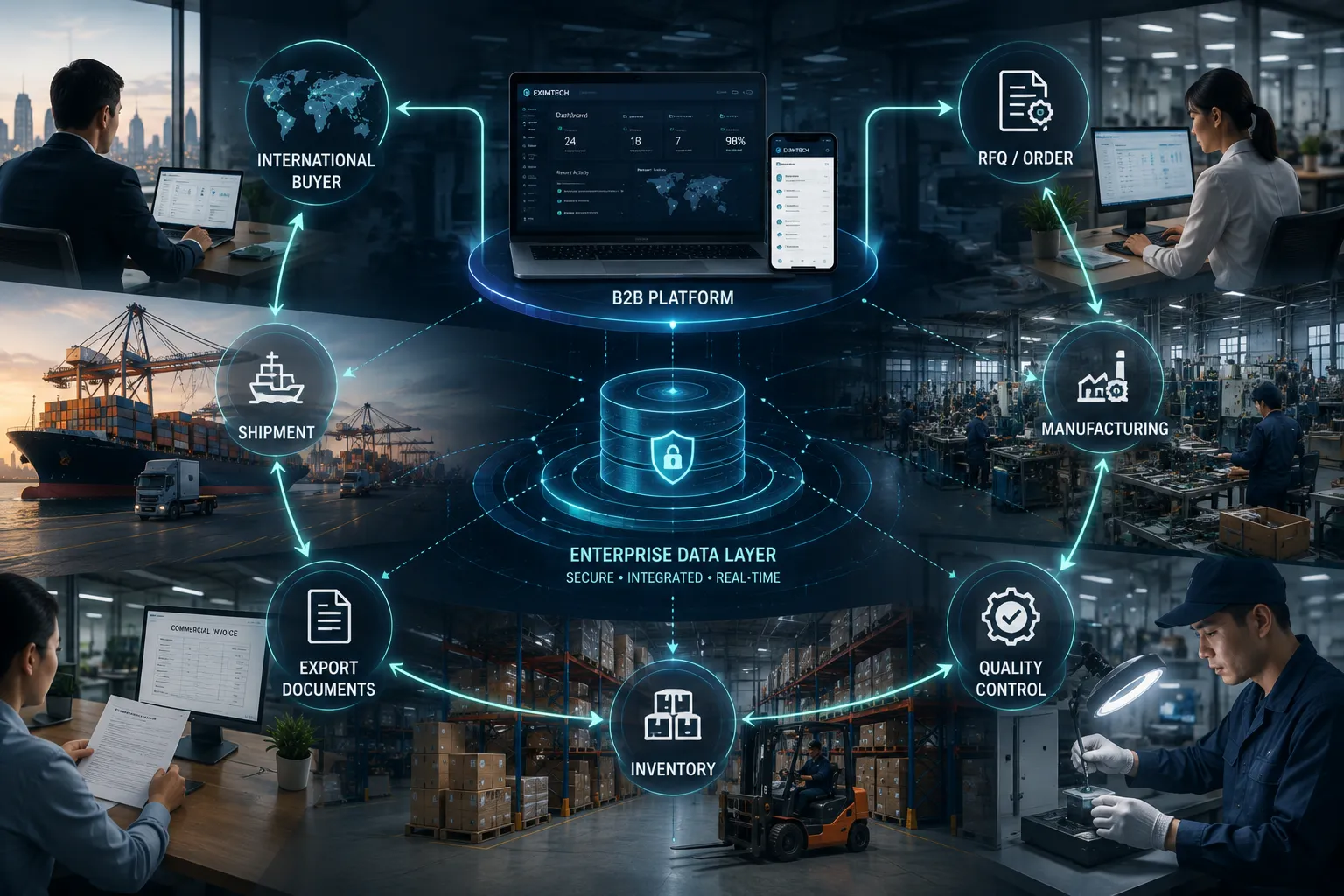
Challenge: An export-oriented manufacturer operates separate websites, sales processes, inventory systems, production data, and buyer communication.
Solution: Create an integrated B2B platform connecting product information, buyer inquiries, internal systems, operational data, and management visibility.
Potential outcome: Stronger buyer experience, better information flow, and more connected operations.
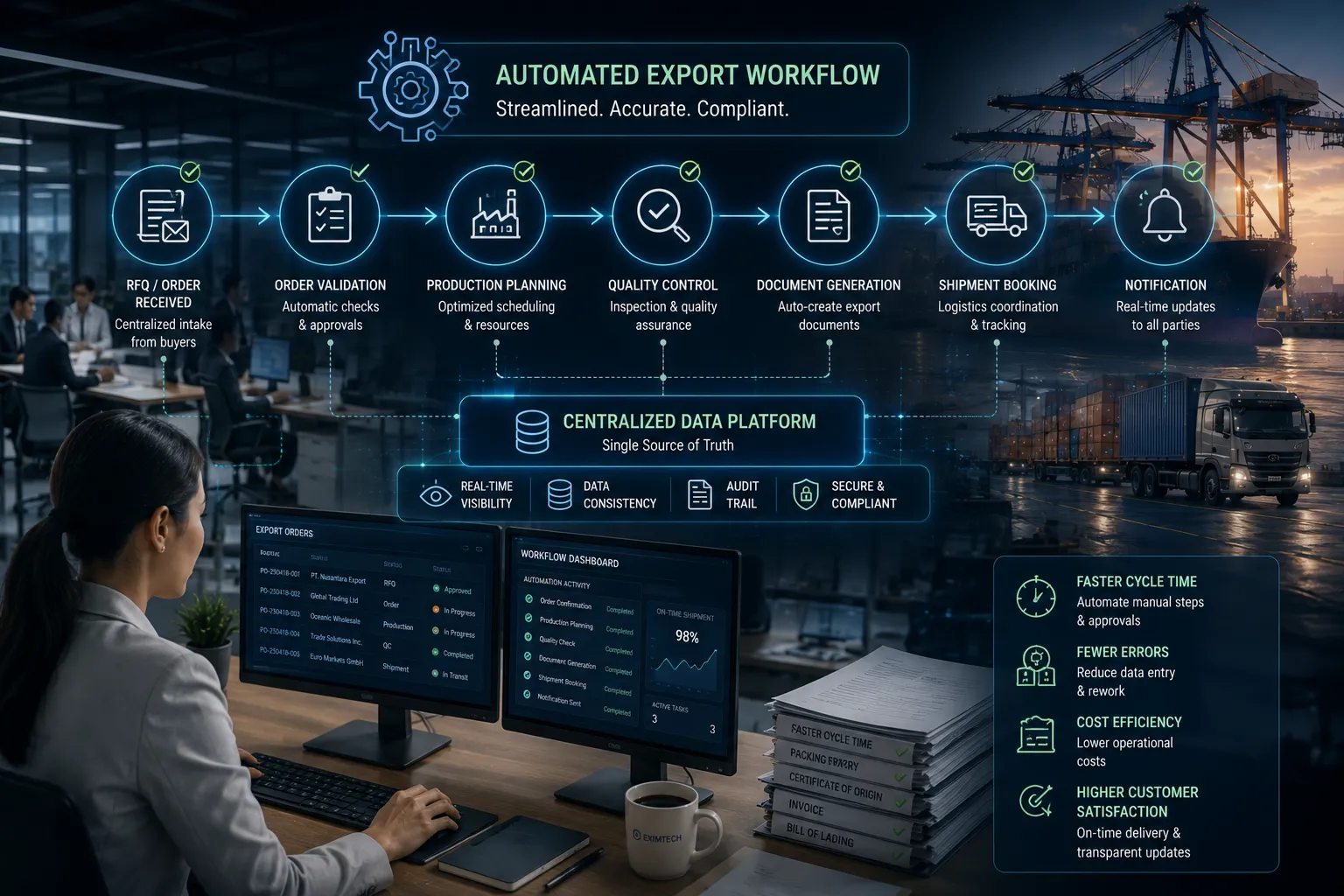
Challenge: Sales, approvals, documentation, shipment coordination, and internal communication depend heavily on spreadsheets, email, and messaging applications.
Solution: Digitalize workflows, approval steps, documentation status, task ownership, and management visibility.
Potential outcome: Reduced manual coordination and clearer operational accountability.
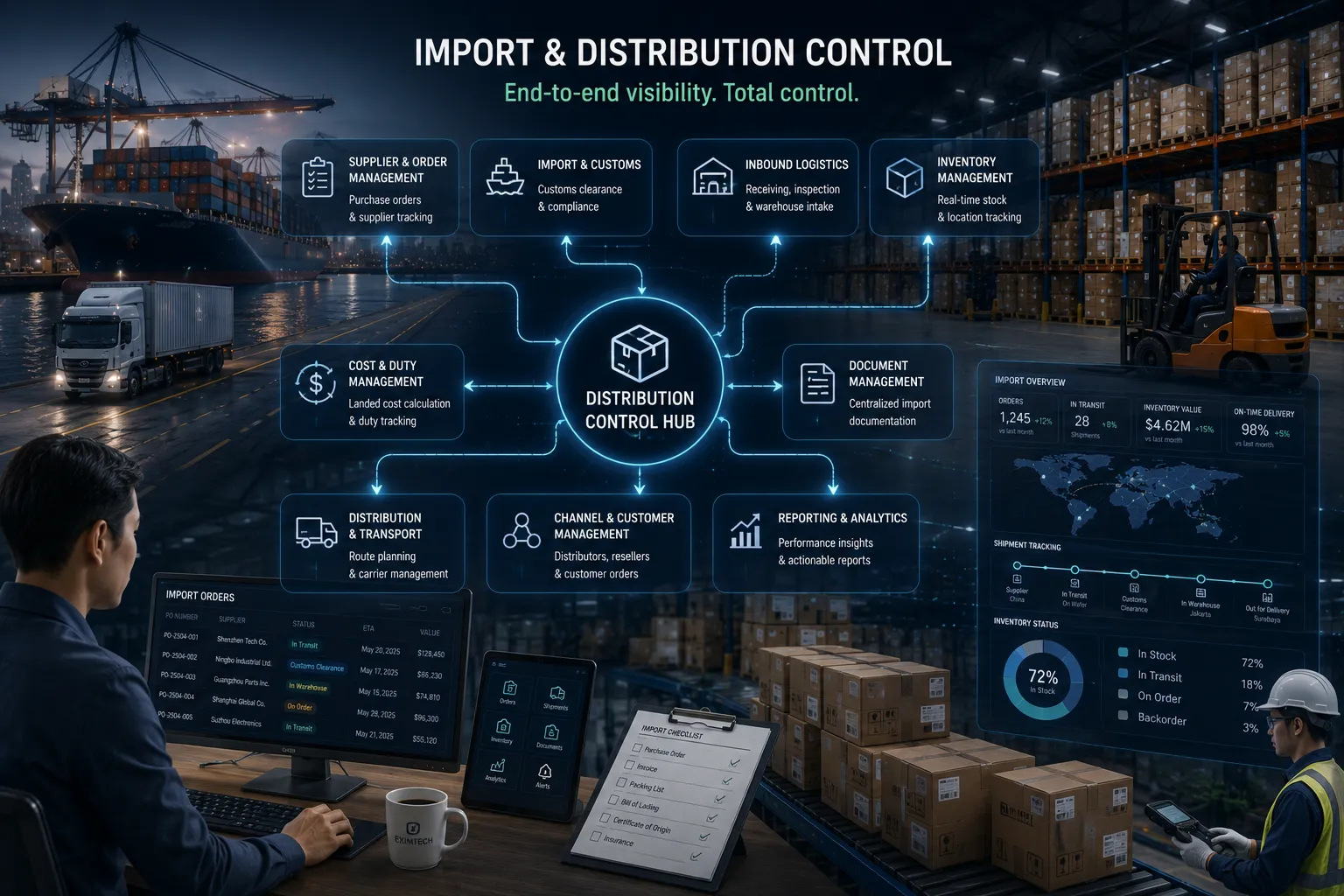
Challenge: Procurement, inventory, warehouse activity, sales, customer orders, finance, and distribution information are fragmented.
Solution: Connect operational systems and create digital workflows for inventory, distribution, customer ordering, reconciliation, and management reporting.
Potential outcome: Improved visibility, control, and coordination across the distribution process.
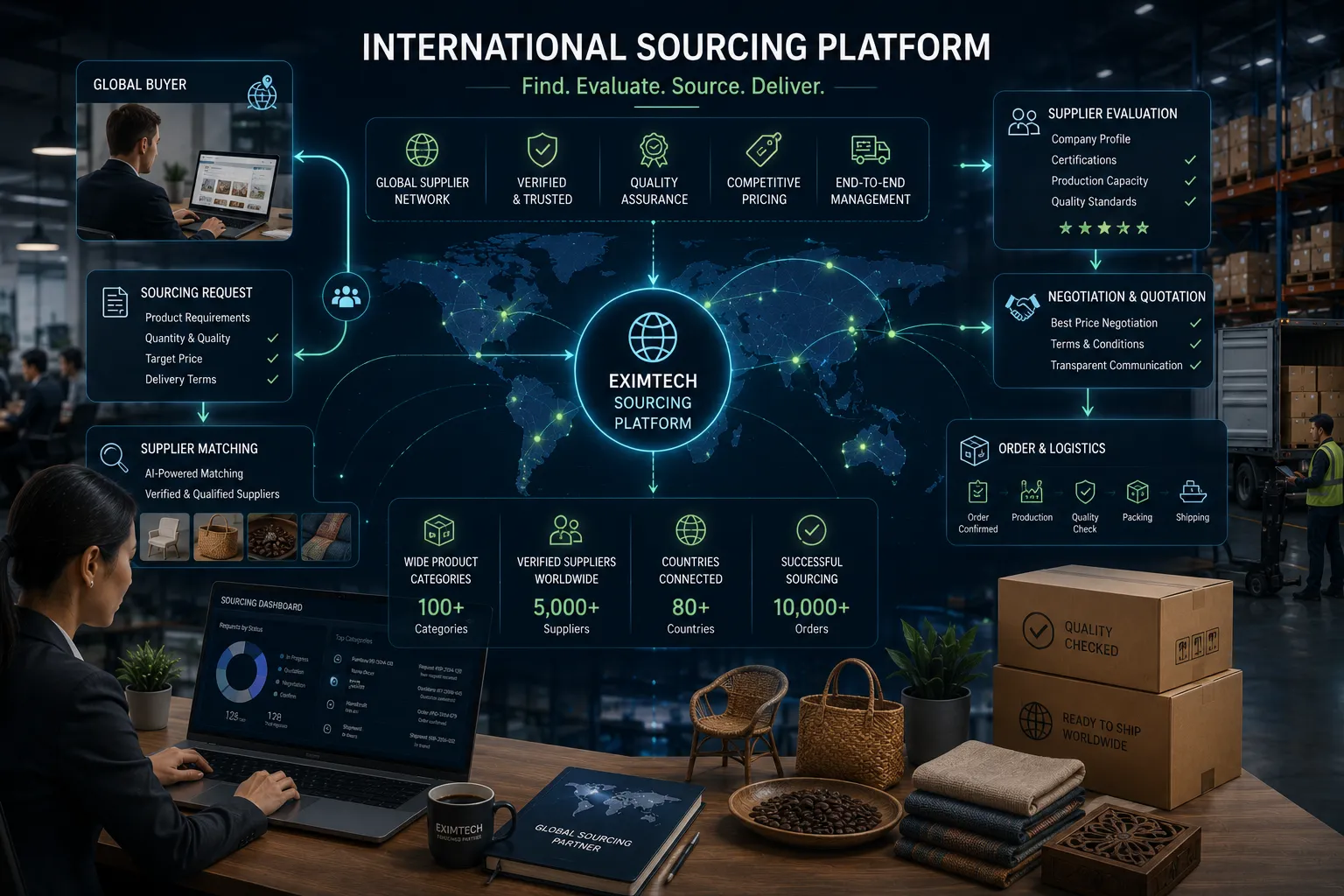
Challenge: Sourcing teams manage supplier discovery, RFQs, qualification, documentation, comparison, and buyer communication manually.
Solution: Build a sourcing workflow platform supporting supplier databases, RFQs, qualification, evaluation, documentation, and collaboration.
Potential outcome: More structured sourcing processes and better supplier information management.
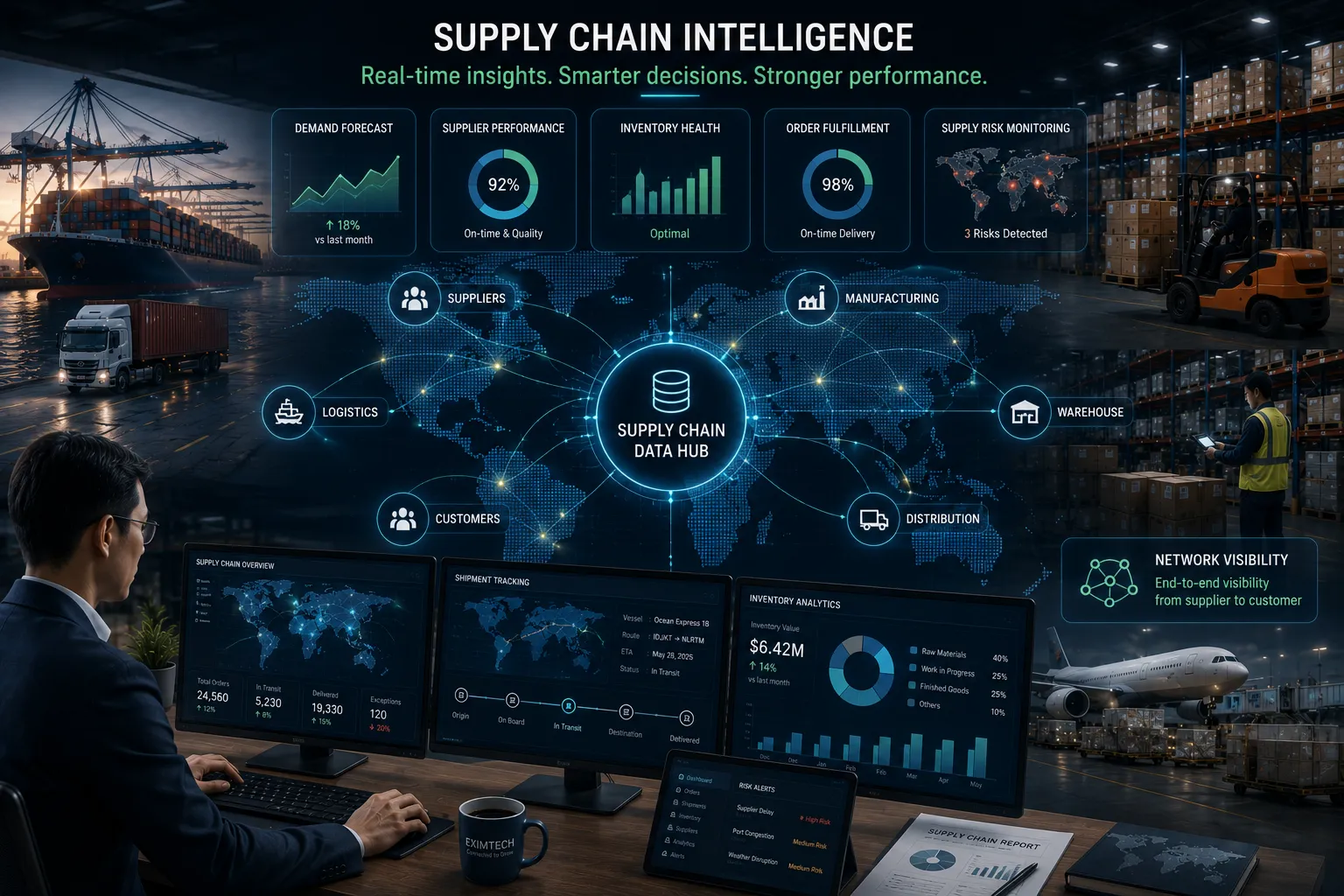
Challenge: Management lacks consolidated visibility across suppliers, orders, inventory, logistics, and operational performance.
Solution: Integrate relevant operational data into dashboards, alerts, reporting, and management decision-support tools.
Potential outcome: Faster access to operational information and better-informed decisions.
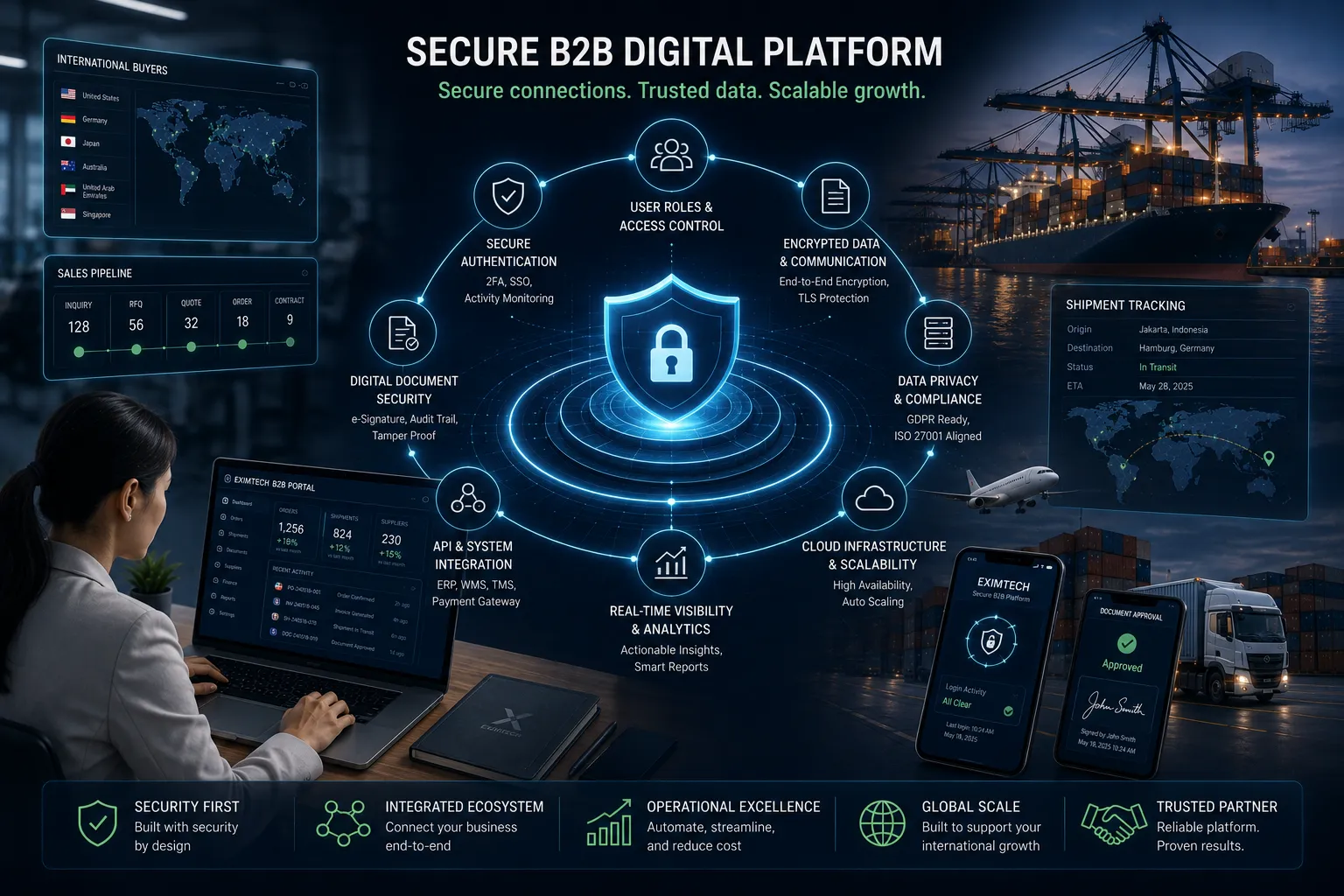
Challenge: A growing international business depends increasingly on digital platforms but lacks structured access control, monitoring, security architecture, and recovery planning.
Solution: Strengthen application architecture, identity/access management, monitoring, backup, infrastructure security, and operational controls.
Potential outcome: More resilient digital operations and improved security governance.
Yes. Eximtech's approach is integration-driven. Existing systems are first reviewed to understand available APIs, databases, workflows, security constraints, and business dependencies. The objective is to connect systems where practical rather than replace working technology unnecessarily.
Not necessarily. Digital transformation often begins by improving selected workflows, connecting existing systems, improving data visibility, or building new digital layers around existing infrastructure.
Yes. Where standard software does not adequately support a business process, Eximtech can design custom applications, workflows, portals, dashboards, integrations, and supporting infrastructure around the organization's requirements.
Security requirements are considered throughout architecture, application development, integration, access control, infrastructure, monitoring, data protection, backup, and operational design. The appropriate controls depend on the system, business risk, data, users, and technical environment.
The implementation approach is designed to reduce unnecessary operational disruption through discovery, process mapping, staged implementation, testing, migration planning, and controlled deployment. The exact approach depends on the complexity and criticality of the systems involved.
Scalability is considered during architecture design, including application structure, infrastructure, integrations, data requirements, users, transaction volumes, markets, and future functionality.
Yes. Digital platforms can be designed with multilingual readiness, international SEO foundations, localized content structures, technical product information, and user experiences appropriate for international B2B markets.
Eximtech begins with business objectives, operational pain points, process dependencies, risk, integration requirements, and expected business impact. This allows initiatives to be prioritized based on business value and implementation practicality rather than technology trends alone.
Practical insights on digital transformation, international B2B platforms, system integration, automation, data, AI, and cybersecurity for companies operating across global markets.

A modern export website should support buyer confidence, technical evaluation, international search visibility, lead qualification, and integration with the wider digital ecosystem.

Fragmented spreadsheets and messaging workflows create operational dependency and limited visibility. A structured digital workflow can improve coordination, accountability, and management information.

As manufacturers, exporters, logistics providers, suppliers, and buyers become more digitally connected, security weaknesses in one part of the ecosystem can create wider operational risk.
Whether you are improving an international B2B platform, connecting business systems, automating export-import workflows, strengthening data visibility, or improving cybersecurity, the right starting point is understanding the business problem.